• Well-being •12 min read


• Well-being •12 min read
Taking an intentional break from social media is one of the fastest ways to reduce digital anxiety, improve mental well-being, reclaim productivity, and break the doomscrolling cycle. With clear boundaries and automation tools like AppBlock, you can shift from FOMO to JOMO and regain control of your time.
Sometimes, the line between staying connected and staying trapped gets a little blurry. It’s not about being addicted; it’s about how these platforms are designed to keep us reaching for them.
The global average time spent online each day is about 6 hours and 40 minutes, a huge chunk of life that often turns into autopilot scrolling.
You might want to ask yourself if your digital habits are still serving you, or if they’ve started to take the wheel. It might be time to step back and unplug if you recognize yourself in these moments:
In Digital Minimalism, Cal Newport cites data suggesting 77% of users feel compelled to reload their profile pages every hour or two—framing the likes-checking loop as a modern habit that is hard to moderate.
In the modern landscape, staying focused can feel like an uphill battle. Social media platforms are addictive by design, utilizing push notifications and infinite scrolls to trigger dopamine hits that reinforce compulsive checking. For many professionals and students, what starts as a quick check often devolves into doomscrolling, the act of endlessly consuming negative or distracting content.
This constant connectivity often leads to a decline in well-being, characterized by heightened anxiety, disrupted sleep, and the dopamine trap, where real-life experiences begin to feel less rewarding than digital validation. Recognizing these signs is the first step toward digital wellness.
Taking a break from social media is more than just logging off; it’s about creating a deliberate space for your mind to breathe. Research from the University of Bath suggests that even a one-week social media break can lead to significant improvements in overall well-being and a reduction in symptoms of anxiety and depression.
The toughest part of a social media break usually isn’t quitting. It’s what shows up a few days later: extra time. A quiet gap where your thumb used to go on autopilot. That gap can feel awkward at first, but it’s also where the reset happens. If you don’t give that space a better job, scrolling will happily apply for the role again.
That’s why the goal isn’t just to stop scrolling. It’s to replace the hit. Your brain still wants something quick: connection, novelty, relief, a tiny reward. The difference is you can meet that need without a feed, as long as you choose a few simple alternatives ahead of time.
However, breaking the infinite scroll habit requires more than just good intentions. Here is a step-by-step strategy to ensure your digital detox actually sticks.
Estimates suggest roughly 5–10% of Americans may meet the criteria for social media addiction.
Don’t just “try to use it less.” Decide exactly how long your break will last. Whether it’s a 48-hour weekend reset or a 30-day digital detox, having a defined start and end date makes the goal feel achievable. Ask yourself: What do I want to do with the 8–9 hours I usually spend scrolling each week?
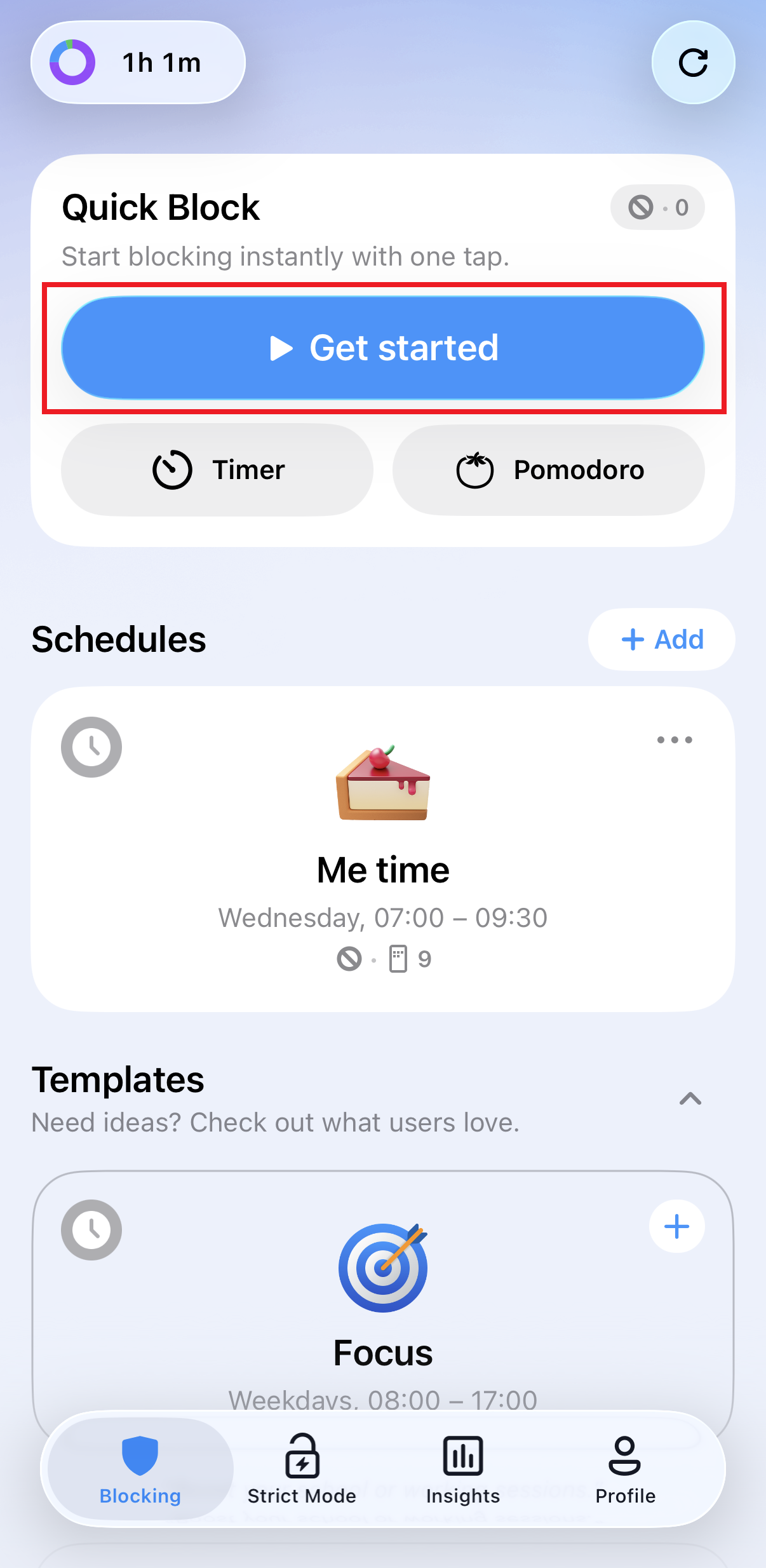
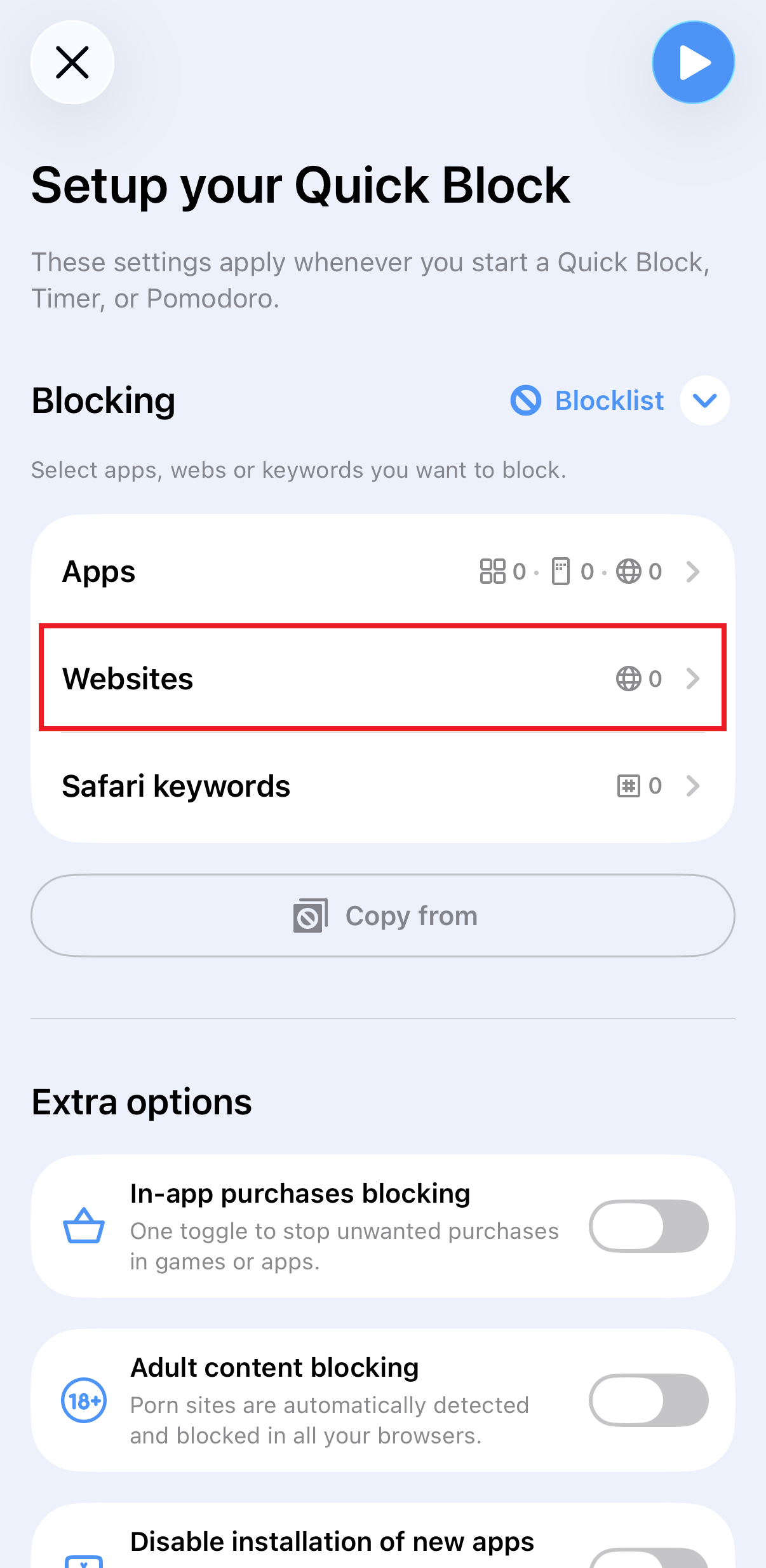
The hardest part of a break is the muscle memory, that subconscious urge to reach for your phone the moment you feel a second of boredom. This is where AppBlock becomes your most valuable ally.
Instead of relying on pure willpower (which is a finite resource), you can use AppBlock to:
Before you start, make your phone “boring.” Move social media apps off your home screen and into deep folders, or better yet, delete them entirely for the duration of your break. Turning off all non-human notifications is also vital—every red dot is a psychological “hook” designed to pull you back into the feed.
The initial days of a break often trigger FOMO (Fear of Missing Out). Counteract this by leaning into JOMO. Replace your scrolling habit with high-quality offline activities:
At the end of your break, don’t just dive back into your old habits. Evaluate which apps made you feel the worst and which ones you actually missed. Use these insights to set permanent Quick Blocks in AppBlock, ensuring that when you do return to social media, it’s on your own terms, not the algorithm’s.
The toughest part of a social media break usually isn’t quitting. It’s what shows up a few days later: extra time. A quiet gap where your thumb used to go on autopilot. If you don’t give that gap a better job, scrolling will happily apply for the role again.
The goal isn’t just to stop scrolling. It’s to replace the hit. Your brain still wants something quick: connection, novelty, relief, a tiny reward. You can meet that need without a feed.
Swap passive interaction for real contact. Instead of tapping like, send a short message that actually lands: thought of you today, how are you. Or drop a voice note. Or call for five minutes.
If you want something social that doesn’t live on a screen, schedule one offline thing each week: a hobby class, a run club, a board game night, a local meetup. Real-world socializing has a better algorithm, it gives energy back.
A feed often fills a real hunger for new information. That hunger is fine. The problem is what we usually feed it.
Try microlearning: 10–15 minutes of a book summary, a language lesson, a short course, a few pages of a good article. You still get that fresh input feeling, but it doesn’t drag you into a two-hour trance.
Endless scrolling is basically a hobby with no output. You spend time and get nothing tangible at the end.
Go for tactile hobbies that leave a trace: pottery, gardening, sketching, cooking, woodworking, learning an instrument. Creativity doesn’t require talent. It requires your hands and a little quiet.
If you want a real reset, choose activities you can’t half-do: puzzles, Sudoku, chess, reading a physical book. These pull your attention into one place and keep it there.
Think of it as strength training for focus. It feels small at first. Then you notice your brain comes back online faster.
One important shift: a social media break is not only about what you remove. It’s about what returns. Not productivity first, surprisingly. Desire. The urge to do something, to go somewhere, to message someone, without needing to post it afterward.
If you want a simple rule that works: when the urge hits, don’t fight it. Redirect it. One action, two minutes, offline. That’s how the habit rewires.
Even a one-week break can lead to significant improvements in depression and anxiety. However, many people find that a 30-day “detox” is necessary to fully reset their habits and break the cycle of social media addiction.
True connections happen offline. Taking a break often encourages you to call loved ones or meet in person, which builds more meaningful relationships than “liking” a post.
Yes. The goal is to replace “aimless scrolling” with “meaningful content”. Productivity apps, reading platforms like Headway, and focus tools like AppBlock are excellent ways to use your phone as a tool rather than a distraction.
For those who must use platforms like LinkedIn for professional reasons, it is best to schedule specific “work blocks” for these tasks. Using a tool like AppBlock allows you to remain productive by blocking personal social media while keeping work-related tools accessible during office hours.
It is common to feel restlessness, irritability, or extreme boredom during the first few days of a break. These symptoms usually peak within the first three to five days and decline as you settle into new offline routines.
Gain back control over your screen, empower your life with AppBlock.
Try for free
Focus is your most valuable resource, but it’s also the easiest to lose. A single notification, a five-minute scroll, or the temptation to check just…

With the spring season approaching many of us are slowly waking up from the winter slumber. Early spring’s sunshine has these rays full of e...

Can’t Focus? You’re Not Alone. Ever feel like you just can’t focus on anything, no matter what you do? You sit down to work, but…